WELCOME TO

Unique blog with fresh pictoral news from Sydney. All images by Chris Bajkowski
===

Unikalny blog z bieżącymi fotoreportażami z największej australijskiej metropolii - Sydney. Zdjęcia - Chris Bajkowski
===


Showing posts with label History. Show all posts

Wednesday, 10 November 2010

Liverpool Bicentenary celebration

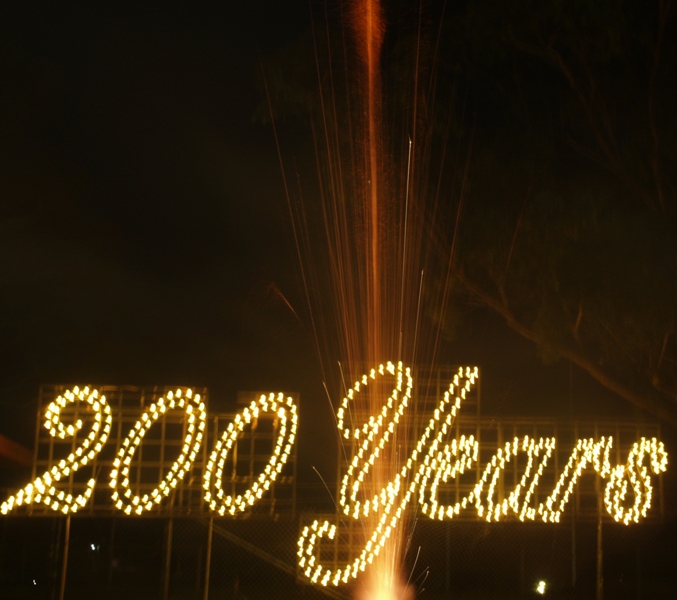
Liverpool, NSW’s fastest growing city,  celebrate Bicentenary. A significant day has been chosen for celebrations a milestone in Sydney's western suburb. Liverpool Bicentenary Festival took place at Woodward Park on Sunday, 7th November.
Same day, 200 years ago,  Governor Lachlan Macquarie founded Liverpool nation's fourth oldest town behind the Sydney City,Parramatta and Hobart. But unllike these cities, Liverpool was the first free planned settlement in Australia.


Sunday, 25 July 2010

The Sydney Rail Bus


In 1937 the NSW Department of Railways introduced six rail buses to its fleet as an economical form of passenger transport on small branch lines.
The concept derived from passenger rail motors, introduced in 1919, which used a traditional timber railway carriage mounted on a converted road truck chassis and drive train. Rail buses took the concept one step further and adapted road vehicle styling, coach-building and technology for rail use. Within a year of their introduction, they were withdrawn for economic reasons, having failed to attract sufficient passenger numbers to make the services viable.

By June 1939, five of the rail buses had been relaunched as mobile pay cars, while the sixth remained a rail bus until some time later.

For almost fifty years, the vehicles were used to move cash on NSW rail lines to pay employees at stations and maintenance gangs working on the tracks. The vehicles were a familiar sight on the network as they made the fortnightly pay runs and were affectionately known as 'pay buses'.

Today, they are no longer in operation, having been replaced by electronic banking. The sole survivor of the first fleet of pay buses, FP1, is today recognised as a significant item of rail heritage.

Sunday, 6 June 2010

Macquarie Visions *2

Governor Macquarie laid the fundation stone for St Mary's Catholic Cathedral in 1821.


Saturday, 5 June 2010

Macquarie Visions

Macquarie Visions is public event celebratingin imersive light displays the 200th anniversary and story of two visionary liders, Governor Lachlan Macquarie and his wife Elizabeth.

From 1810 to 1821 the Macquaries made an unparalleled contribution to the growth of NSW and Australia, instaling hundreds of ground-bracking public programs and championing the importance of agriculture, education, justice, benevolence and "fair go" for all.
Lachlan and Elizabeth Macquarie are attributed with much of the infrastructure building of NSW including churches, schools, hospitals, roads and banks.


Macquarie Visions illuminates the incredible legacies and achivement of Macquarie's 11-year tenure as Governor of NSW through innovative, theatrical and contemporary light displays of Macquarie Street linking St Mary's Cathedral to the Opera House as a part of Vivid Sydney Festival.

Sunday, 30 May 2010

Collingwood House - 200th birthday


The 200th anniversary of Collington House, the oldes in Liverpool and the fifth oldest, still standing in Australia, was remembered on Saturday. The father of Australian whaling Eber Bunker build this house in 1810.
Organised by the Friends of the Regional Museum and Collingwood House, the birthday celebration included several exhibitions, a speach by Liverpool mayor Wendy Waller, displays by local spinners, craftsmans and beekeepers as well as local dressed in colonial ensembles.


Saturday, 20 February 2010

Broadway


Broadway - road and Sydney urban locality, historically important because it is one of the first roads built in the colony of New South Wales, in 1794.
Broadway was once home to the flagship building of department store chain Grace Brothers until 1995, operating there for 90 years. It was visited by Queen Elizabeth II during her 1954 visit to Australia. Today this site contains the Broadway Shopping Centre and the Hotel UniLodge Sydney.


Broadway provides a link between the University of Sydney and the University of Technology.

Tuesday, 26 January 2010

40 years of Kaldor Public Art Projects


In 1969 artists Christo and Jeanne-Claude came to Sydney and wrapped the rocky coastline at Little Bay; two-and-a-half kilometres of coast and cliffs up to 26 metres high. It was the largest single artwork that had ever been made at the time. One of the first major land art projects anywhere in the world, it was made possible by a young Australian collector, John Kaldor.

Most Australians had never heard of Christo and Jeanne-Claude until John Kaldor invited them to wrap the coastline in Sydney. Their wrapping of Little Bay was an unprecedented work of conceptual art which proved a catalyst for a burgeoning avant-garde in Australia.

There were more to follow. In 1973 Kaldor brought out Gilbert & George who were then fresh out of St Martin’s School of Art in London where they had introduced the idea of ‘living sculpture’. They performed The Singing Sculpture at the Gallery. Dressed very formally and carrying canes, with their hands and faces painted like polished bronze, they climbed up onto a table and began miming to the iconic wartime British tune ‘Underneath the arches’.

In 1995 one of the best known of the Kaldor projects was Jeff Koons’ Puppy outside Sydney’s Museum of Contemporary Art. This gigantic sculpture, over 12 metres high, towered in front of the MCA looking out towards the Sydney Opera House.

Sunday, 3 January 2010

La Perouse: The Barrack Tower


The Barrack Tower in La Perouse have been erected in XIX centuary, in the time of governor Macquarie known as Watch Tower. It was the centre for small group of soldiers who kept watch for smugglers and also directed stray vessels from 1831 to 1904.

Plówysep La Perouse wystawiony jest na dzialanie stalych,silnych wiatrów.


Erozja piaskowca wieży przybiera zadziwiające kształty.

Saturday, 2 January 2010

La Perouse

Henry Head, La Perouse

Located on the northern side of Botany Bay, La Perouse was named after Le Compte de Laperouse, a French explorer who arrived here in 1788.La Perouse is located about 14 kilometres south-east of the Sydney CBD.

La Pérouse’s two ships sailed to New South Wales after some of his men had been attacked and killed in the Navigator Islands (Samoa). La Pérouse arrived off Botany Bay on 24 January just six days after Captain Arthur Phillip (1738-1814) had anchored just east of Bare Island, in H.M. Armed Tender Supply. On 26 January 1788, as Arthur Phillip was moving the First Fleet around to Port Jackson after finding Botany Bay unsuitable for a Settlement, La Pérouse was sailing into Botany Bay,anchoring there just eight days after the British had.

The British received La Pérouse courteously, and offered him any assistance he might need. The French were far better provisioned than the English were, and extended the same courtesy; but neither offer was accepted. La Pérouse sent his journals and letters to Europe with a British ship, the Sirius. A scientist on the expedition, Father Receveur, died in February and was buried at what is now known as La Perouse.


Visit the La Perouse museum containing maps, scientific instruments and relics recovered from the French explorers. From the museum, there is a great walking trail to the Endeavour Lighthouse (Henry Head), offering spectacular views across the bay to the site of Captain Cook's landing place.

Bare Island bridge, La Perouse

La Perouse Museum

Monument for memory of Monsieur de La Perouse

Friday, 4 September 2009

Exposed! The Story of Swimwear Exibition.


Movie sirens, aquatic stars, bathing beauties, athletes, sporting icons, swimmers and designers all played their part in the evolution of the modern swimsuit. Blurring the boundaries between underwear and outerwear, the swimsuit continues to make shock waves.

Australian swimwear is placed in a global context, showing how Australian swimmers and swimwear designers responded to their environment, to the strong local swimming and beach culture, and to international fashion trends.

From the 1900s swimwear evolved from hidden, almost medicinal outfits for bathing and soaking to more functional, fashionable garments - and an essential item of leisurewear. Australian designs reflected changes in taste, customs and international trends.

The exhibition will explore popular culture, and the designers and personalities who influenced swimwear development. Before 1910 Australia's mermaid Annette Kellerman and her contemporaries created a new modern look, not only for the swimsuit but for women.

Australia's appetite for swimwear created a local industry on the back of a developing knitwear manufacturing base. Speedo, founded as MacRae Knitting Mills in 1914, became a household name for sporting suits from 1929 with its innovative racer-back design. It remains a dominant brand internationally. Innovations in design and textile technology remain a strong feature of swimwear development.

Exposed! The story of swimwear highlights the designs and designers, past and present, at the forefront of Australian swimwear fashion.


Wystawa powięcona historii mody plażowej potrwa do 25 października w Australian National Maritime Museum.

Saturday, 25 April 2009

ANZAC Day in Sydney *1


Są różne parady na ulicach Sydney w ciągu roku. Żadna z nich jednak nie jest tak ważna jak ta organizowana z wojskową dokładnością 25 kwietnia w rocznicę krwawej bitwy z siłami Imperium Otomańskiego na Galipolii w ramach Operacji Dardanelskiej z 1915 roku. Brytyjczycy, w szeregach których walczył ANZAC - Korpus Australijsko-Nowozelandzki oraz Francuzi ponieśli wówczas ogromne straty w ludziach. Zginęło około 250 tys. żołnierzy. To najbardziej pamiętna przegrana bitwa w militarnej historii australijskiej.
Dzień ten jest tu obchodzony w całej Australii jako dzień żołnierza i pamięci tych, którzy zginęli na wszystkich frontach wojen: obu światowych a także tych późniejszych jak koreańskiej czy wietnamskiej . Toteż w dzisiejszej paradzie uczestniczyli wetrani różnych narodowości.


Saturday, 4 April 2009

Clean face of the Church

St Mary’s Basilica was commenced in 1868, soon after fire destroyed the first cathedral. It was finally completed in 2000 with the addition of the spires.
This Cathedral represents the spiritual origins of the Catholic Church in Australia. It is one of Sydney's most treasured historic buildings and one of the finest examples of English-style gothic churches in the world. William Wilkinson Wardell, the 19th century architect, dreamed of a gothic structure shaped from the local yellow-block sandstone on which this city is built. The building was finally completed 100 years after the architect's death. The Cathedral is dedicated to Mary Help of Christians. It is the spiritual home of Sydney’s Catholic community, and the seat of the Archbishop of Sydney.

The work of renovation of this masterpiece began in 1996 and this huge task of conserving St Mary’s is still continued.


Fresh facade of the St.Marys Cathedral

Tuesday, 24 February 2009

Aussie Pavlova & Mardi Gras

In 1935, the chef of the Hotel Esplanade in Perth, Western Australia, Herbert Sachse, created the pavlova to celebrate the visit of the great Russian ballerina, Anna Pavlova. Whilst it has been suggested this dessert was created in New Zealand, it has become recognized as a popular Australian dish. Good dessert on the last day of the carnival (Mardi Gras).


Pavlova na ostatni dzień karnawału. Niewielu jednak w Australii wie, że to własnie dzisiaj jest Mardi Gras (fr. tłusty wtorek) czyli koniec karnawału.

Friday, 20 February 2009

Redfern & JP2

Co ma Redfern wspólnego z papieżem Janem Pawłem II? W tamtejszym Kościele Sw.Wincentego znajduje się niezwykły fresk z fragmentem tekstu, który polski papież wyglosil w Alice Springs do rdzennej ludności Australii w 1986 roku. Byl to historyczny moment dla Aborygenów. Dla nich te slowa mają takie znaczenie jak dla Polaków homilia Jana Pawla II z czerwca 1989 roku na Placu Zwycięstwa w Warszawie: " Niech wstąpi Duch Twój i odnowi oblicze ziemi, tej ziemi".

St Vincent Church, Redfern

Inside Redfern Catholic Church. Words of the Pope John Paul II to Aboriginal people.

Monday, 26 January 2009

Australia Day *1

Australia Day czyli"Dzień Australii", znany także jako Anniversary Day i Foundation Day to święto państwowe Australii obchodzone dzisiaj, 26 stycznia. Upamiętnia założenie przez kapitana Arthura Phillipa (późniejszego Gubernatora Australii) pierwszej stałej osady na tym kontynencie - kolonii karnej przy Port Jackson.Dzis Australijczycy celebrowali ten dzień w parkach a przede wszystkim nad zatoką Port Jackson, gdzie odbyla sie parada wszystkiego co plyw wlącznie z replikami historycznych żaglowców.


W 1888 roku Australia Day był świętowany po raz pierwszy we wszystkich stanach poza Adelajdą. W 1935 roku po raz pierwszy był świętowany w całej Australii.